A CLOCKWORK ORANGE "Poe Faced Hooligans" vs. "The Griswold Technique"
- stanleykubricksemp
- Jul 19
- 1 min read
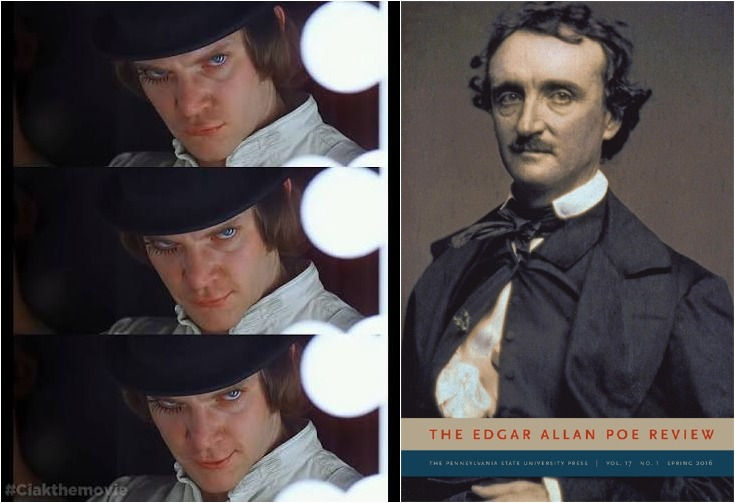
Alex DeLarge
vs.
Edgar Allen Poe


Edgar Allan Poe and Rufus Griswold were literary rivals whose fraught, volatile relationship culminated in a posthumous character assassination. Griswold outlived Poe and, as his literary executor, used a fabricated obituary and biography to permanently damage Poe's reputation, casting him as a mad, drug-addled drunkard.

The animosity began in 1842 when Griswold, a prominent anthologist, published The Poets and Poetry of America. He included only three of Poe's poems while favoring other writers, prompting Poe to feel slighted. Poe subsequently criticized Griswold's editorial abilities, leading to a bitter, long-simmering public feud between the two.


Ironically, before Poe died in October 1849, he named Griswold as his literary executor. It is highly debated why Poe did this—possibly because he believed Griswold possessed the necessary industry connections and power to ensure Poe's works would remain in print and financially support his surviving family.

Immediately following Poe's death, Griswold published a scathing obituary in the New York Tribune under the pseudonym "Ludwig". He subsequently expanded this into a biographical essay called "Memoir of the Author," which was published alongside Poe's collected works. In the memoir, Griswold fabricated evidence, forged letters, and painted Poe as a depraved, destitute, and drug-abusing madman.

While Griswold's malicious lies were intended to destroy Poe's legacy, they ironically cemented his enduring cultural mystique. The sensationalist biography generated immense public interest, ensuring that Poe's books continued to sell.




Comments